
Explore
Shirting Fabric in Mumbai: How Smart Buyers Secure Quality, Consistency, and Scale

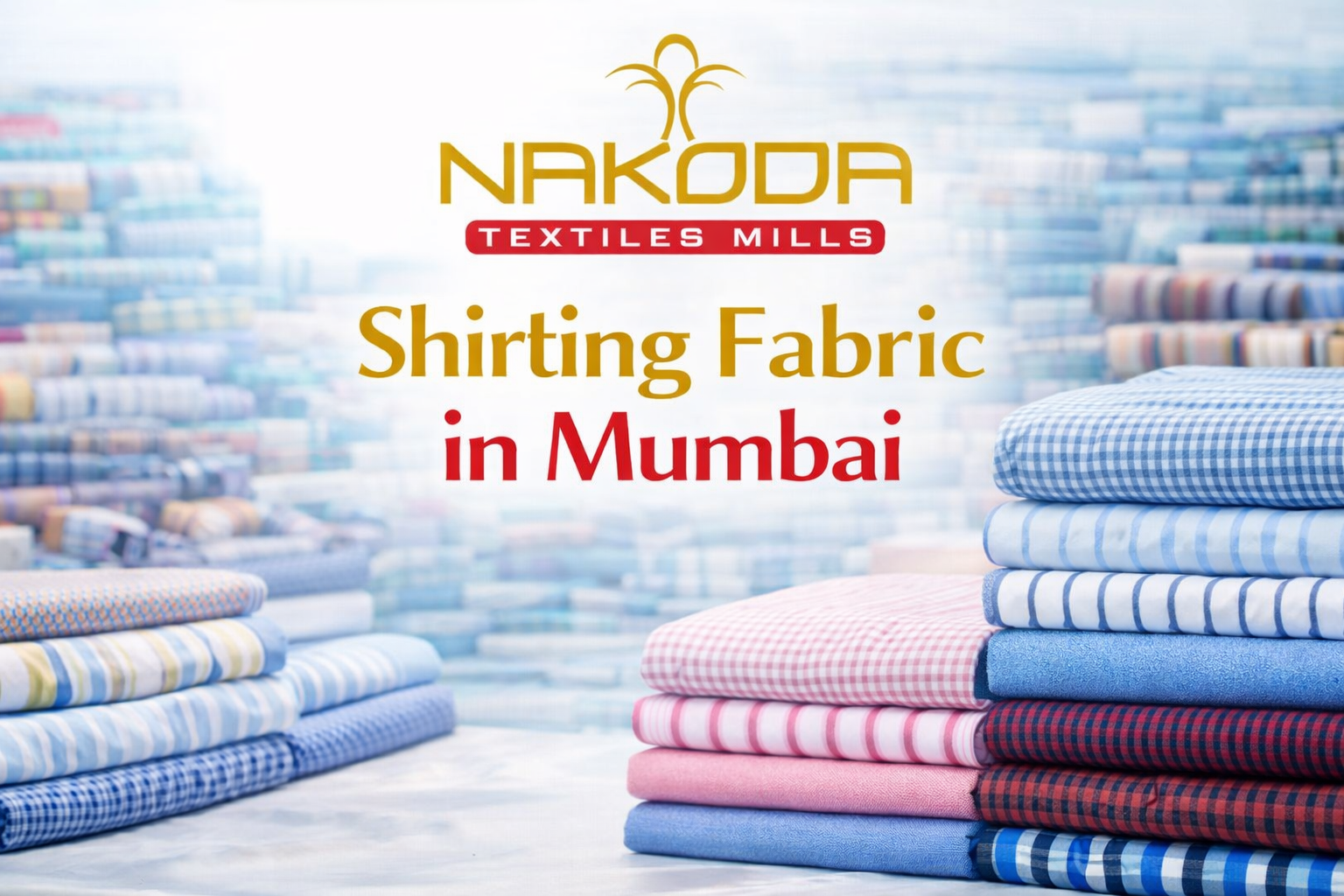
The demand for shirting fabric in Mumbai is driven by one brutal reality: shirts are high-volume, high-visibility garments where fabric failure is not forgiven. Poor shirting fabric leads to fitting issues, colour bleeding, shrinkage complaints, and repeat losses that quietly erode brand trust. Mumbai continues to dominate the shirting fabric market because it offers something most sourcing hubs cannot—manufacturing depth combined with execution speed. But sourcing blindly, even in Mumbai, is still a mistake. This guide breaks down how professional buyers source shirting fabric correctly and why manufacturing-led suppliers matter.
What Defines High-Quality Shirting Fabric?
Shirting fabric is engineered, not chosen emotionally. A visually appealing sample means nothing if the bulk fabric behaves differently under production and wash conditions.
High-quality shirting fabric is defined by:
- Uniform yarn strength
- Controlled GSM across rolls
- Breathability with structural stability
- Smooth surface finish
- Colour fastness and shrinkage control
Manufacturers who control production can deliver these parameters repeatedly. Others cannot.
Why Mumbai Leads the Shirting Fabric Market
Mumbai’s role in India’s textile industry is the result of decades of industrial maturity.
Why Mumbai remains the top sourcing destination:
- Dense network of textile mills and processors
- Skilled manpower trained in woven fabrics
- Proximity to dyeing, finishing, and testing units
- Faster turnaround for bulk orders
- Export-ready infrastructure and logistics
For buyers operating on deadlines, Mumbai reduces uncertainty.
Many buyers prolong and suffer from the adverse side effects.
To source directly from the manufacturer, consider:
A rise in the order numbers that constitute the volume
- A need to meet stringent specifications of a fabric item
- Quality complaints that reoccur as quality problems change hands
Another matter of concern is the implication if there remains a delay in lead time to production planning?
Variability in cost leads to a decrease in profitability.
Traders then become more of guests and less of hosts.
Shirting Fabric Production in Mumbai
Without understanding the flow of production, one cannot distinguish well-organized minds of buyers versus reactive minds.
Manufacturing means
- Yarn sourcing and Testing
- Weaving
- Dyeing or dyeing and finishing
- Finally to feel and do stable
- Quality control at various stages
- Roll Packing and Dispatch
Apart from all these steps, good manufacturers offer stability. On the other hand, there is much risk involved if you outsource blindly.
Which Shirting Fabric Types Are Commonly Manufactured?
Mumbai caters to a wide range of shirting applications.
Popular shirting fabric categories include:
- Pure cotton shirting
- Cotton-blended shirting fabrics
- Formal office shirting materials
- Casual and daily-wear shirting
- Custom GSM and weave fabrics
The deciding factor is not range—it is consistency in bulk.
Critical Parameters Buyers Must Not Ignore
Buyer Evaluation Checklist
- Yarn count consistency
- SM tolerance levels
- Shrinkage percentage post-wash
- Colour fastness to wash and rubbing
- Finishing smoothness
- Production scalability
- Quality inspection protocols
- Local logistics efficiency
Ignoring these factors guarantees sourcing problems later.
Manufacturer vs Fabric Trader: The Real Difference
| Aspect | Manufacturer | Trader |
| Production Visibility | Complete | None |
| Batch Consistency | High | Variable |
| Custom Fabric Specs | Yes | Limited |
| Cost Transparency | Clear | Marked-up |
| Delivery Control | Strong | Uncertain |
| Long-Term Reliability | High | Low |
This is not a branding difference—it is an operational one.
What Makes Nakoda Textiles Mills A Reliable Manufacturer Of Shirting Fabrics
Nakoda Textiles Mills work on a manufacturing-first approach putting quality control, scalability, and customer trust at the forefront.
What buyers gain:
Direct control over manufacturing processes
Stable quality across repeat orders
Clear specification alignment
Scalable production capacity
Reliable local coordination within Mumbai
This model supports long-term sourcing, not one-off transactions.
The strategic value of local manufacturing
Being located in Mumbai will allow quicker coordination among production units, transport partners, and buyers.
This local advantage reduces delays, simplifies communication, and enables quicker issue resolution—especially for time-sensitive bulk orders.
Local sourcing is not just convenient; it is operationally efficient.
How Shirting Fabric Quality Impacts Your End Product
Fabric quality directly affects:
- Shirt drape and structure
- Wear comfort and breathability
- Stitch durability
- Wash performance
- Brand perception
Fabric defects multiply downstream. Preventing them starts at sourcing.
Outcomes of Choosing the Right Shirting Fabric Partner
Professional sourcing delivers measurable results.
MANUFACTURING LOCALLY—ITS STRATEGIC ADVANTAGES
Local presence in Mumbai facilitates quicker interaction between manufacturing units, logistics vendors and buyers. The benefits anticipated are:
Low rate of rejection also means reduced rework.
Production is firmly put on schedule.
Predictable, clear costs.
Customer satisfaction due to improvement in quality.
More brand loyalty.
There are, somewhat continuously, some small sourcing meltdowns. Good sourcing repayments lead to downtime.
LONG TERM VENDORS
Reliable sources of manufacturing provide services and goods not common in spasmodic sourcing relationships:
- Carded fabric development
- Continentious price-making
- Priority production schedule
- Conflict fabric training supplies